Designing the Machine: Finding Your Niche
The niche is often visible in the work long before anyone has said it out loud.
Most creative businesses end up with a niche before they've decided to have one.
The work that holds up, the clients who return, the projects that arrive by referral rather than pitch — they tend to cluster around something. Experience accumulates around particular problems, and that accumulation shows up in the portfolio whether it was planned or not. At some point, if you're honest about it, a pattern is already there.
The niche question is less often a strategic decision than a recognition. And recognition, for most founders, is harder than it should be — because naming the pattern means accepting the edges it implies, and accepting edges feels like risk when you're used to staying open.
Fleava's Reel. The niche is often visible in the portfolio before it's been declared — a consistent set of values, client types, or aesthetic judgments that have been accumulating without being named.
The first piece in this series — Designing the Machine: Closing the Gaps — was about the gap between knowing what a creative business needs structurally and actually building it. This piece is about the niche: the decision most founders resist longest, and the one that shapes everything else. It is also, in my experience, a decision that is less deliberate than most advice about it suggests.
The Hidden Cost of Serving Everyone
The case for staying broad feels like risk management. More industries, more client types, more entry points for revenue. In practice, it trades one form of risk for another — and the second form is harder to see because it looks like ordinary effort.
When an agency's offering is indistinguishable from the next one, it competes on price. There's no viable alternative: without a specific domain of expertise on offer, the client is evaluating execution, and execution can always be sourced more cheaply. Work arrives, gets handled, moves on. Nothing compounds underneath it.
The operational cost runs deeper than positioning. Every new industry requires rebuilding context from scratch — the vocabulary, the client psychology, the standards by which the client judges success. A studio that has spent three years inside a specific sector carries knowledge that no brief can convey to one arriving for the first time. That knowledge shows up as speed, as accuracy in creative judgment, as confidence in the room. The studio arriving fresh has to earn it inside the engagement, at the client's expense and the agency's.
The result is a consistently competent studio that never becomes authoritative — permanent effort without compound return.
The Fear
The resistance to picking a niche is nearly universal among creative founders, and it's worth taking seriously rather than dismissing as irrationality. It's driven by a specific fear: that narrowing the offering will reduce available work, that the pipeline will dry up, that opportunities will be missed.
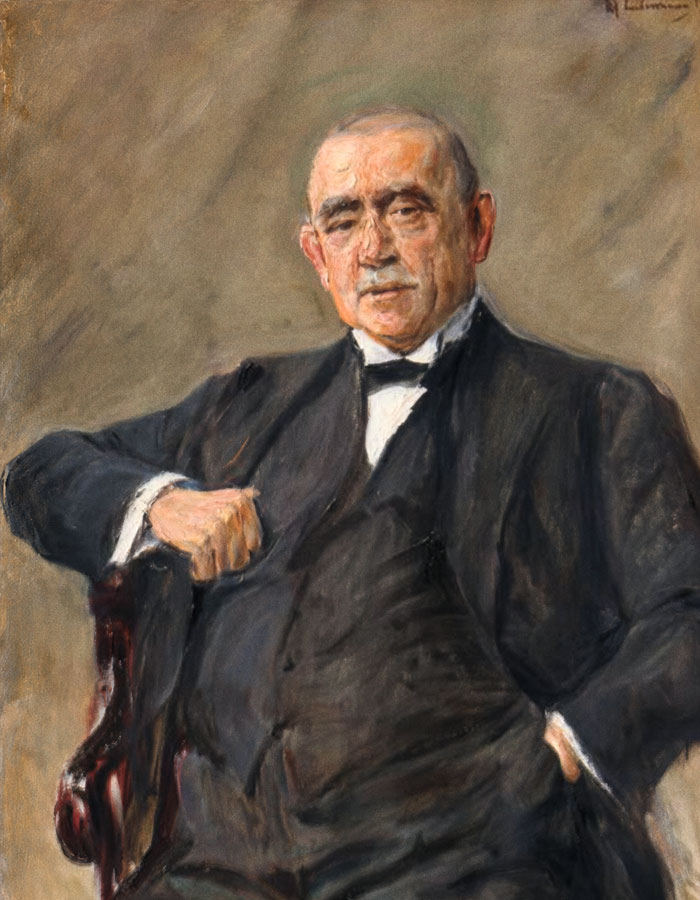
Paul Rand was known for turning away clients who wouldn't give design genuine authority. The confidence required for that kind of selectivity doesn't come from deciding to be selective. It comes from having a position clear enough to know what belongs inside it and what doesn't. Clarity produces the confidence; you can't arrive at it the other way round.

Paul Rand, c. 1942. Rand's selectivity about clients — and his refusal to present multiple options — was inseparable from his authority. The confidence to hold that position came from having a clear one, not the other way round.
The cardiologist doesn't worry about missing orthopaedics work. The IP attorney isn't anxious about estate planning. These professions accept deep specialisation as the prerequisite for command fees and professional authority — not as a limitation on practice. Creative agencies are unusual in treating the same condition as a risk, and the reason is partly structural: unlike medicine or law, the creative industry has no licensing framework that enforces specialisation. The generalist option is always available, so the decision never feels forced.
There's a subtler form of the resistance too. Most creative founders have genuine curiosity across domains — that's often what made them good at the work in the first place. Using the agency as a vehicle for that curiosity feels intellectually honest. What it creates operationally is a business that reinvents its processes for every new context, drives up internal complexity, and never builds the depth that justifies a price premium.
What Niche Actually Means
A niche is easy to misread as an industry category. The industry is part of it, but the real specificity runs deeper: the particular client, the particular problem they carry, and the particular definition of quality the studio has built the right to hold.
Fleava operates in luxury — five-star hospitality and resort development, high-end restaurants and marine projects. The defining constraint is that work has to feel timeless. Trends are largely irrelevant. Quality means longevity and restraint, and that value system shapes the whole studio: how long concepts are developed, what the creative director defends under pressure, how the team judges whether something is finished.
Stud operates for brands that need to define a moment rather than follow one — clients for whom safety is failure. The operating model runs on experimentation and risk. If a direction feels too familiar, it goes. These two studios share almost nothing at the operational level: different processes, different timelines, a fundamentally different definition of what good means. They couldn't run on the same model and produce work that holds up.
Stud's showreel. The work moves with the same appetite as the positioning: fast, high-contrast, and built for brands that need to define a moment rather than follow one.
PX PUSH exists for a more specific reason. Freedom Tech — the sector built around decentralisation and open economic models — has a persistent gap between technical credibility and creative quality. Many products in this space are technically serious and visually invisible. That gap is what PX PUSH was built to close: world-class design brought into a sector shaping something genuinely new, on that sector's own terms. The subscription model matches the speed these teams move at, and the niche is what keeps the work from being generic.
Three studios, three entirely different understandings of what quality means. None of them could serve each other's clients well. Each of them can answer the question of what they do in a sentence.
Finding It, and Making the Transition
More often than founders expect, the niche isn't found — it forms.
A studio develops fluency in a particular type of work through enough repetition to build genuine capability. The portfolio starts to tell that story without anyone having declared it. Clients in that sector find the studio because the evidence is already there; more work in that direction arrives; the pattern reinforces itself. The niche crystallises from what the market has been rewarding, not from a strategic planning exercise. Fleava didn't set out to be a luxury studio. It became one through the accumulation of work that was strongest in that space, clients who came back, and referrals that arrived from within a specific world.
This matters because it changes the question. For most studios, the task isn't picking a niche from a blank slate — it's being willing to name and commit to the one that's already forming. The pattern is usually visible in the work long before anyone has said it out loud.
For studios where the pattern hasn't emerged yet, or where the current mix is too scattered to read clearly, the method is the same: look at the engagements where the outcome was strongest and the client came back. Those share something. The niche is usually there, waiting to be named.
The fear that drives founders away from naming it is usually financial: the worry that a public commitment to a niche will cut off revenue before the niche has built its own pipeline. The practical answer is to separate what the studio seeks publicly from what it accepts privately. Public positioning is a marketing constraint — it shapes the website and the case studies. It doesn't dictate what the studio takes on behind the scenes to maintain cash flow during the transition. A focused public position can coexist with a broader private practice while the new pipeline matures.
Grow and Convert, a content marketing agency, built a premium niche by taking direct accountability for conversion metrics — something most content agencies explicitly avoided. The positioning was narrow and specific, easy for the right client to recognise immediately. It didn't require turning away all other work on day one. It required knowing what they were building toward.
The niche is a direction, not a cliff edge.
The Niche Enables the Machine
The structural payoff is what makes this worth the difficulty.
A focused studio compounds its knowledge. Three years inside a specific sector means referrals that arrive from within it, vocabulary without effort, faster and more accurate creative judgment, and a process built for that type of complexity. It goes deeper with each engagement, raising the floor of the work and the efficiency of the operation.
PX PUSH. A studio built around a specific market gap: bringing sharper creative quality to technically serious Freedom Tech products, without sanding away the sector's own language.
Focus Lab, which specialises in structural brand architecture for B2B technology platforms, charges between $75,000 and $350,000 for complex rebrands. That pricing reflects accumulated expertise in a specific domain — the kind of authority that a generalist studio producing comparable creative work cannot credibly hold, because the knowledge underneath the work isn't there.
A generalist studio has to rebuild context with every new client. The work may be executed competently, but nothing accumulates underneath it. The studio arrives at the same baseline every time.
The first piece in this series — Designing the Machine: Closing the Gaps — argued that most agencies know what their structural problems are long before they fix them. The niche is what makes it possible to know what those problems are in the first place. Without a defined purpose, every gap is invisible: there's no specific client expectation to fall short of, no domain expertise to build toward, no standard precise enough to measure against. The niche gives the machine something to build toward.
Most creative businesses struggle at the structural level — the system working against the output it was built to produce. The niche is what aligns them.
Sources
- Paul Rand — Wikipedia
- David C. Baker, The Business of Expertise. ReCourses, 2017. recourses.com (verify link)
- Blair Enns, The Win Without Pitching Manifesto. RockBench Publishing, 2010. winwithoutpitching.com (verify link)
- Grow and Convert, Positioning Case Study. growandconvert.com (verify link)
- Focus Lab, Perion Brand Strategy & Identity. focuslab.agency (verify link)