The Liebermann Portrait That Came Home
A German banker who stood against the Reich. Part 2.
In a family house at Lake End, above a staircase, there is a painting by Max Liebermann. It is an oil portrait of a bald, heavyset man in a dark suit, seated in a wooden chair, arms folded. He has a small moustache and he is looking at something slightly to the left of the viewer — not quite meeting the eye. Liebermann signed it in the top right corner, in the cramped hand he used in old age, and dated it 1927. The subject is August Weber, my great-grandfather.
I have never seen it in person.
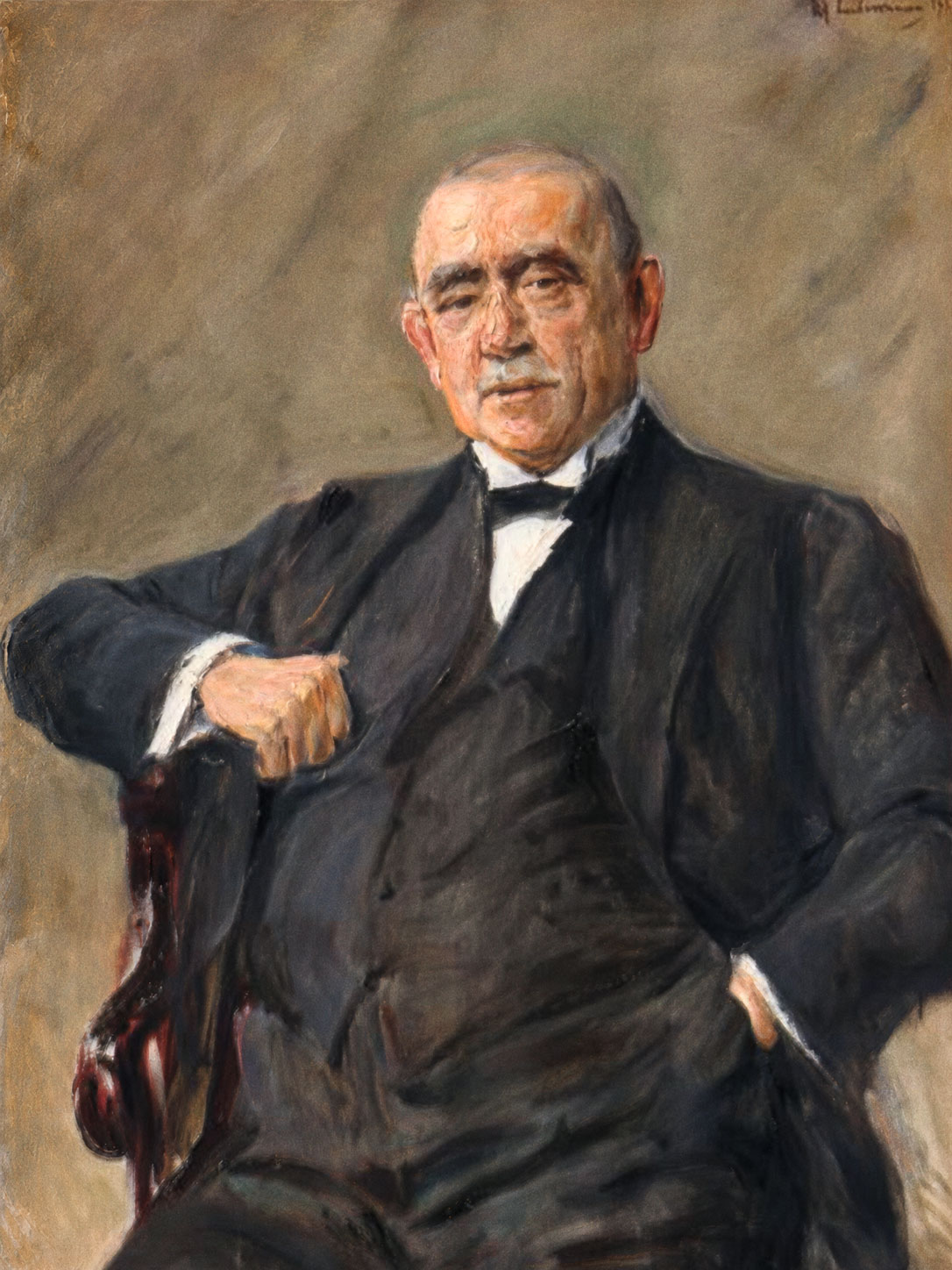
Portrait of August Weber by Max Liebermann, 1927. Oil on canvas. Private collection, Weber family.
This piece grew out of an article I wrote about August Weber himself — his life in Weimar finance and politics, his years of arrest and removal under the Nazis, and his exile to London. The portrait appears there, briefly, as one of the things that didn't follow him out of Germany. Writing that piece made clear it had its own story. This is that story.
The painter
By 1927, Max Liebermann was the most celebrated living German artist — president of the Berlin Secession, founder of the German Impressionist movement, a figure of such institutional weight that the Prussian Academy of Arts had been built around him. His sitters over the decades had included Albert Einstein, Gerhart Hauptmann, and Paul von Hindenburg. He was also Jewish, Berliner, and eighty years old, and the world that had made him its centre was four years from ending.
To be painted by Liebermann in 1927 was a statement. It placed August Weber in a particular tradition of Weimar portraiture — cultured, liberal, civic — at the precise moment that tradition was coming under the most sustained attack it had faced. The two men knew each other through overlapping circles: the Berlin intelligentsia, the professional life of a city in which a progressive banker and a progressive painter moved through the same rooms. The closer link ran through August's wife, Marie. As a girl she had been tutored alongside Liebermann's niece Grete Ring, and Ring's father — a judge at the Prussian Court of Appeal and Liebermann's brother-in-law — was a close friend of Marie's mother.
The portrait was completed in six sittings in Liebermann's studio. Jan Webber, my grandfather, was ten years old and remembered the sessions clearly. August told the family about conversations with Liebermann during the sittings. One exchange he repeated: August had offered the opinion that Liebermann's portrait of Chancellor von Bülow had not been a success. Liebermann replied: "I couldn't stand the man."
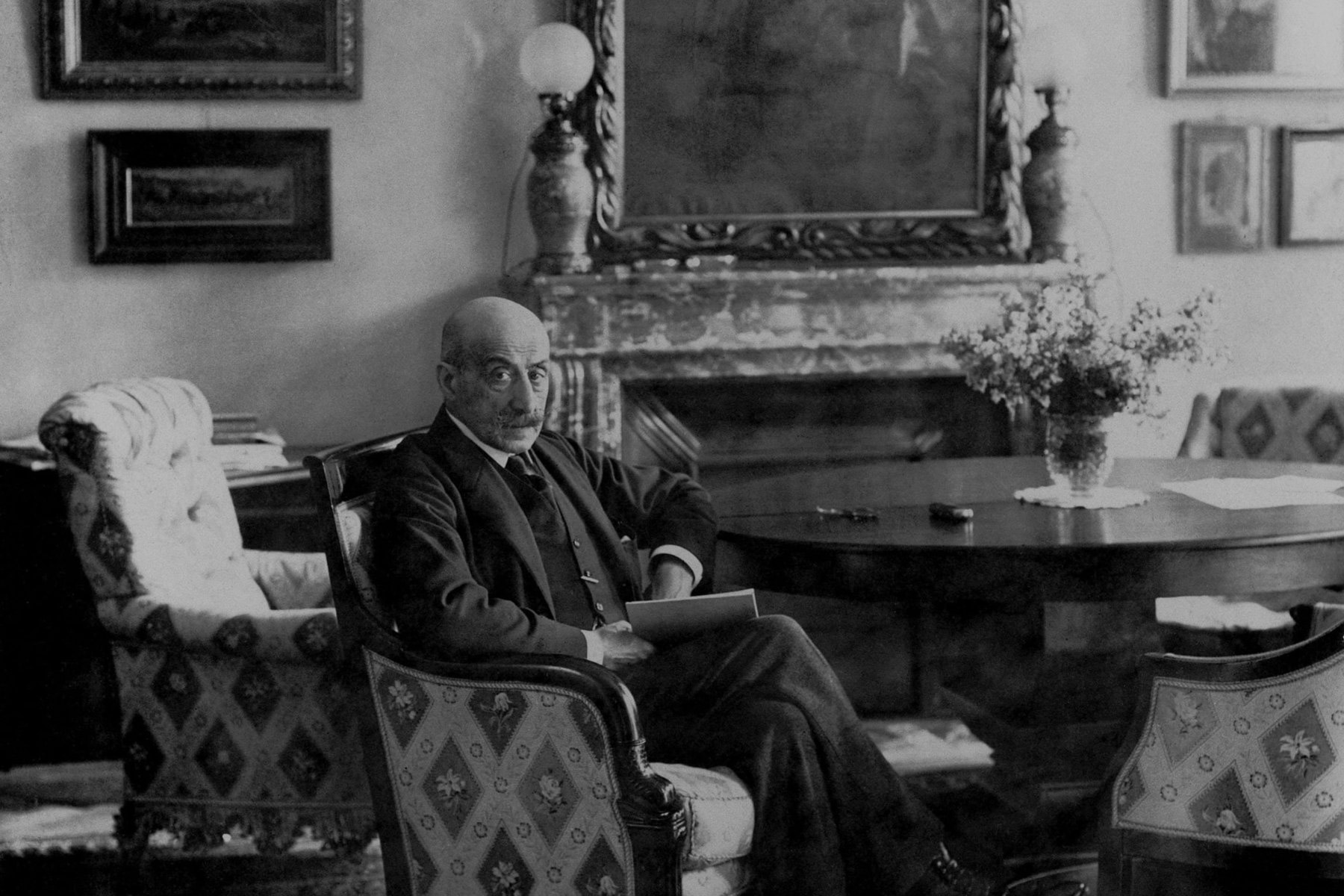
Max Liebermann at his villa in Wannsee, c. 1927 — the year he painted August Weber's portrait. © Max-Liebermann-Gesellschaft.
The estate
After the sittings, the portrait hung in August's study at the Domäne Löpten — the estate south of Berlin that he had leased in 1920, and the family's only home from 1926. Löpten was the centre of their life during the Weimar years: a solid three-storey house with a dining table that sat sixteen, a brickworks, a run-down village he brought electricity and a proper road to, and some 700 hectares of flat, sandy Brandenburg land he had taken on to improve. Jan grew up there. In his memory, the portrait was simply part of the house — above a desk, in a room his father worked in, the way portraits are when they have always been there.
They left Löpten in 1933. The Nazis came to power and in April August was arrested, on the orders of the Nazi Gauleiter of Saxony. The sequence of removals followed: board memberships, associations, income, the estate itself. The family relocated to an apartment in the Mommsenstraße in Charlottenburg. At some point after the first arrest — Jan believed it was around then — his parents began discussing what could be protected, and how.
Grete Ring and the Amsterdam route
The person who solved the problem of the portrait was Grete Ring. She was a childhood friend of August's wife Marie, a niece of Liebermann, an art historian by training, and since 1924 a partner in the Berliner Kunsthändlerfirma Paul Cassirer — the most significant art dealership in Germany, the gallery that had represented Liebermann for decades and whose Amsterdam branch had been operating since 1923. Ring was the kind of person who knew how to move things.
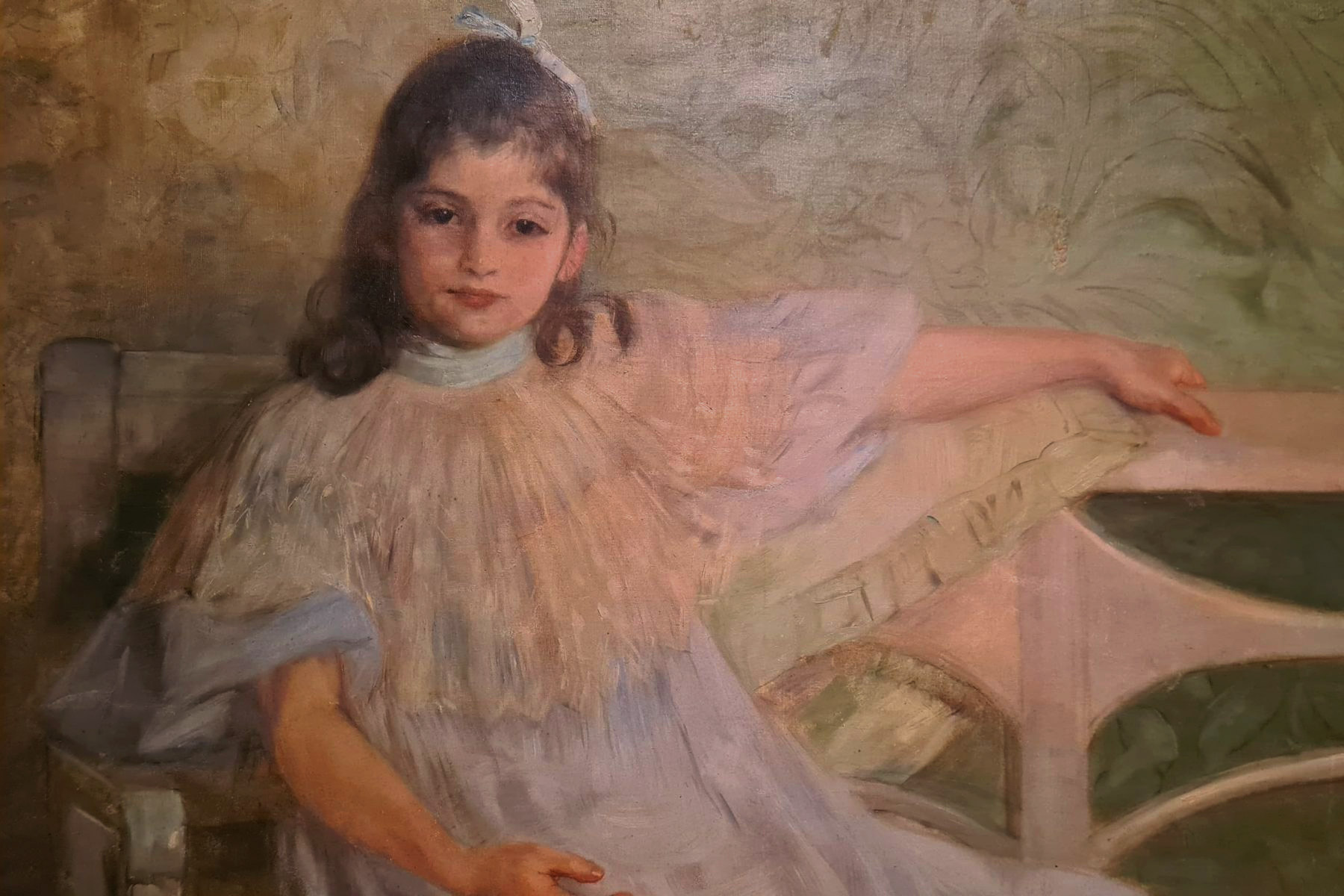
Grete Ring, portrait by the Secession artist Dora Hitz, c. 1900. Ring was Liebermann's niece by marriage, a partner in the Paul Cassirer gallery, and the person who arranged for the Weber portrait to leave Germany. © Liebermann-Villa am Wannsee
The portrait left Germany through the Cassirer network and was brought to Amsterdam, where it was placed with the Rijksmuseum for safekeeping. The logic was straightforward. Holland was neutral, stable, and outside the Reich. The Rijksmuseum was one of the great European institutions. If anything could be kept safe, it was this.
There was also a particular resonance to the choice of country. Liebermann had spent nearly every summer in the Dutch countryside for decades, painting farm workers, fishing villages, and the flat northern light that had shaped his early work. Of all the places outside Germany, Holland was the one he knew best.
Marie's side of the family had a portrait of its own to give up. In 1900 the Swedish painter Anders Zorn, staying with the Cassirers in Berlin, painted the thirteen-year-old Marie Cohn — the shared tutor with Grete Ring was probably how the introduction came about. "I've just come from a four hour sitting, the second," he wrote to his wife, "and it looks marvellous." When Marie's widowed mother, Paula Meyer-Cohn, left Berlin for Geneva in 1933, she sold the painting before she went. It resurfaced at a Stockholm sale in 1938 and vanished into a Swedish private collection until 2005, when it hung in the Bröhan Museum in Berlin catalogued as Portrait of a Fräulein Cohen. Maria Weber Steinberg, Marie's daughter, wrote to the museum to explain who the girl was, and Jan was invited to the opening with two of his children.
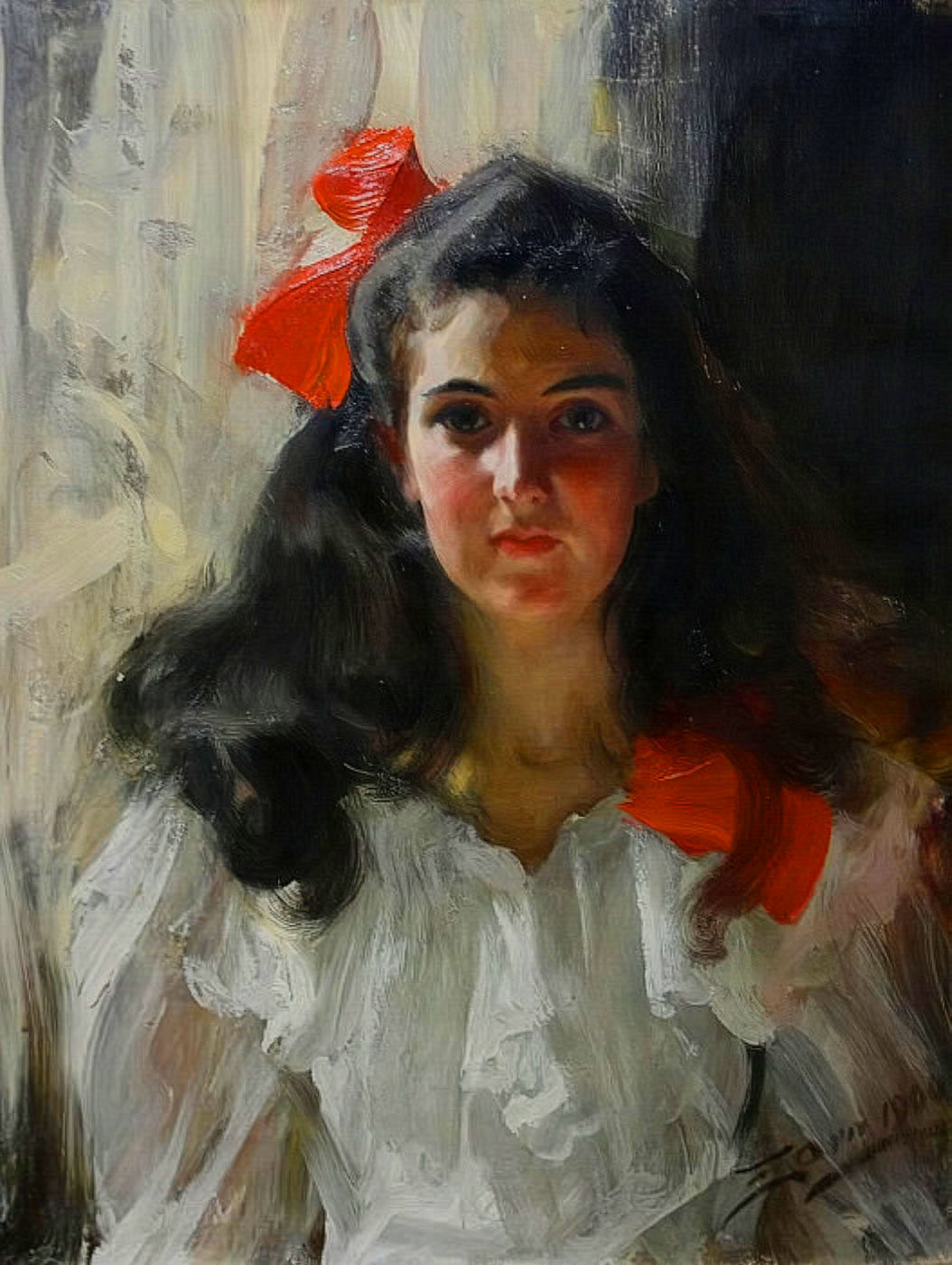
Marie Cohn, aged thirteen, by Anders Zorn, 1900. The subject became Marie Weber, August's wife. The portrait is the centrepiece of Erika Esau Boeck's account of Maria's life.
Liebermann's end
In May 1933, Liebermann resigned the honorary presidency of the Prussian Academy of Arts. He was eighty-five. The alternative was expulsion. He did not attend another public event. Watching Nazi columns march past his window, he told those who visited him: »Ich kann gar nicht soviel fressen, wie ich kotzen möchte« — I cannot eat as much as I would like to puke. He died on 8 February 1935, in Berlin, in his house on the Pariser Platz — two years before his work was formally classified as entartet and removed from public collections.
His wife Martha was still alive when the war began. She stayed in the house. On 5 March 1943, she was notified that she would be deported. She was eighty-five. That evening, she took an overdose of Veronal. Police arrived to collect her and found her in a coma. She survived five more days and died on 10 March 1943 at the Jewish Hospital in Berlin.
After her death, the Reich confiscated the Liebermann estate.
The man who had painted August Weber's portrait at the height of both their lives had ended this way. His wife had chosen the terms of her own death rather than accept what the state had arranged for her.
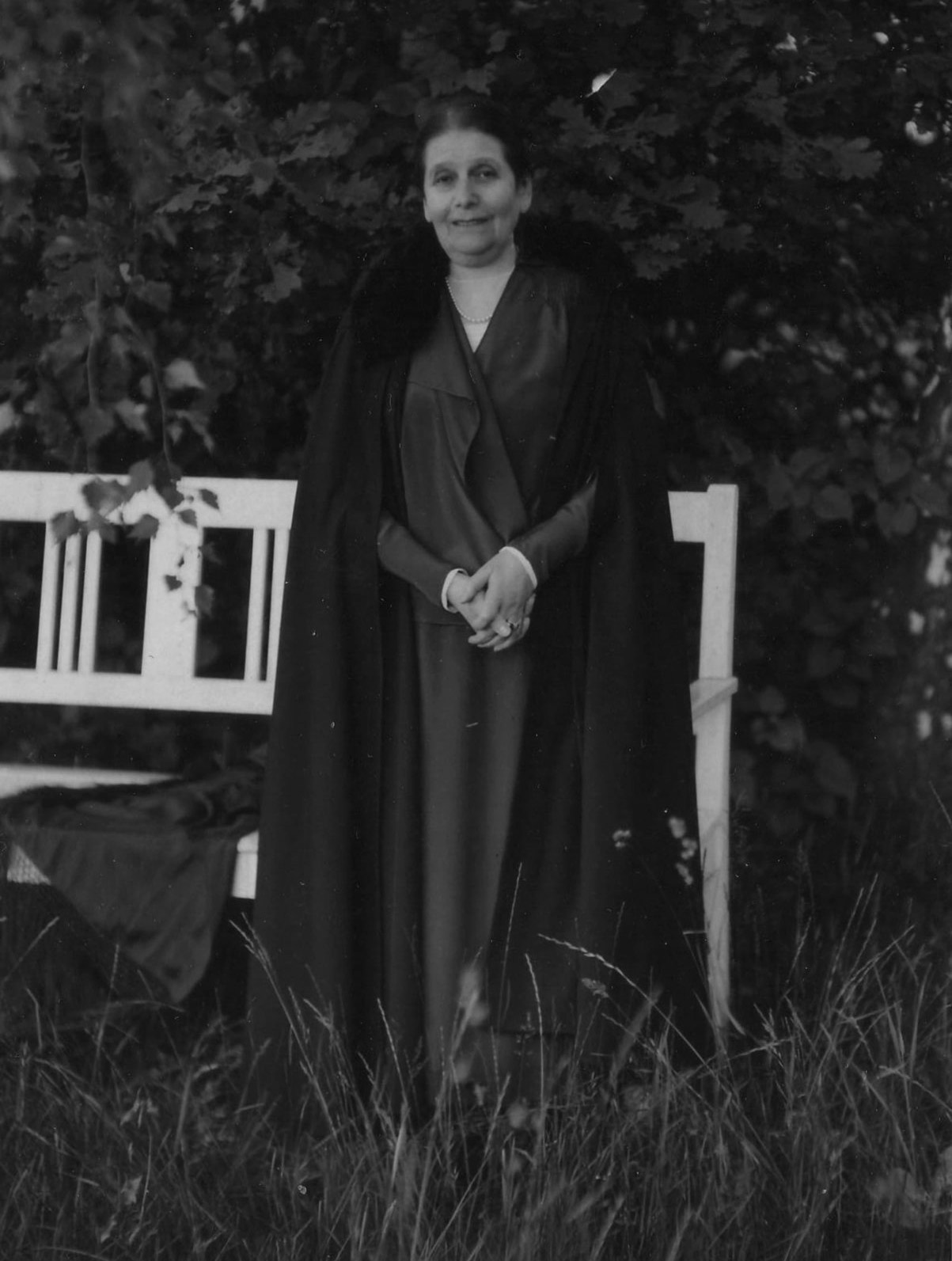
Martha Liebermann in the garden at Wannsee, 1927. She was 85 when the Nazi authorities ordered her deportation in March 1943. Photograph: W. v. Debschitz-Kunowski, Berlin. © Max-Liebermann-Gesellschaft
May 1940
When Germany invaded the Netherlands, the portrait had been in Amsterdam for the better part of a decade. By then August was in London — he had left Germany in February 1939, via Holland, with 27 Marks. Marie had left the month before. Their children were scattered: Paula and Jan were in England, Maria was studying in Geneva, and Augusta had been at college in Vermont since 1938.
The Dutch surrender was signed on 15 May 1940. Arthur Seyss-Inquart, who had overseen the Anschluss and assisted with the art looting of Poland, was appointed Reich Commissioner for the occupied Netherlands. Among the people he brought with him was Kajetan Mühlmann.
The Dienststelle Mühlmann
Mühlmann was an Austrian art historian with a doctorate from the University of Vienna and a career that had run through the German security apparatus since the 1930s. In Poland he had directed the systematic confiscation of cultural property. In Holland, he established the Dienststelle Mühlmann — his agency, headquartered at the Sophialaan in The Hague — which operated as a clearing house for art seized from Jews and other enemies of the Reich, and as a procurement operation for senior Nazi officials including Hitler and Göring.
The Dienststelle specifically targeted the property of German Jews who had fled to Holland after 1933. This was a known pattern, tracked by a network of informants. A postwar intelligence report on the operation documented one example by name: "The storage of the Jewish Berlin collection of Dr. Jaffé in the Museum at Leiden, through confidential information from private quarters in Germany, led to the seizure of the large collection, owner of which had emigrated to England." Émigré collections placed in Dutch institutions for safekeeping were not harder to find. They were easier.
In 1942, the Liebermann portrait was taken by the Mühlmann operation in The Hague and classified as German property.
Mühlmann was arrested by the US Army in 1945, gave testimony to the Office of Strategic Services, and in 1947 escaped Allied custody during a hospitalisation. He died in Munich in 1958 — one year after August Weber.
The return
August made inquiries after the war. Holland told him the painting could not be found. He assumed it had been requisitioned and auctioned off, and he died in London on 8 November 1957, aged eighty-six, without seeing it again.
Forty years later, someone identified the sitter. The portrait had been at the Van Gogh Museum in Amsterdam and was then transferred to the Mesdag Museum in The Hague. Jan wrote about it that year, 1997, in an essay called Geschichte und Geschichten: Weber und Liebermann, published in Berlin by Edition Luisenstadt. He ended the piece with a single sentence: "My sisters and I hope that it will return to our family's possession in the foreseeable future."
It did. In the memoirs Jan wrote in his last years, he noted that the portrait had reappeared seventy years after it was painted and forty years after his father's death, and that "it now hangs in Paula's family home at Lake End" — the house of his eldest sister's family. A photograph in the book shows it on the wall above a staircase, with two of August's grandchildren, Jonathan and Joanna, standing beside it.
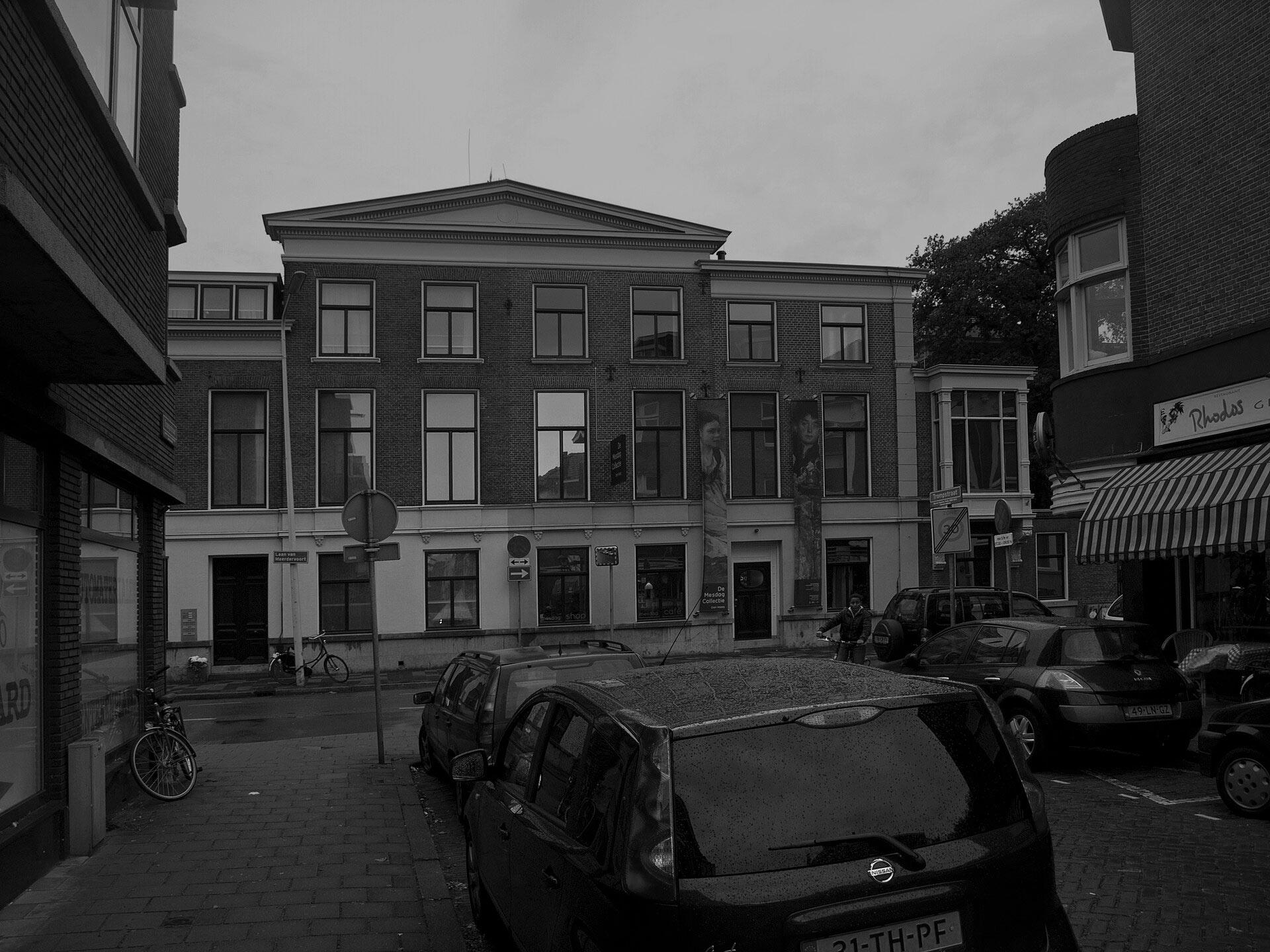
The Mesdag Museum (Museum Mesdag), The Hague, where the portrait hung after it was identified in the 1990s, before it returned to the Weber family.
What was lost
Maria Weber Steinberg — August's daughter, one of the twins sent to school in Lausanne in 1933 when she was fourteen — died on 7 July 2013 in Los Angeles. She had become a mathematician, settled in California, and worked as a volunteer at LACMA into her late eighties. Among the things she kept at her home in Pacific Palisades was a small drawing of her father by Liebermann. When she had gone back to Löpten in the 1970s — the estate was in East Germany by then — she found the old servants living in the house.
Apart from the portrait, nothing came back. Löpten had been leased and the Berlin flat rented, so there was no property to reclaim, and what savings August had were in government bonds the war made worthless. He had left the rest of his belongings to his sister Gretchen to dispose of.
A note on the painting itself
Liebermann was eighty when he painted August Weber. He worked quickly — six sittings, Jan said. Looking at the portrait, you can see something that isn't present in the formal photographs of either man: a quality of ease, a subject who is sitting for someone he knows rather than performing for an institution. August doesn't look triumphant. He looks like a person at rest, briefly, in the middle of a life that isn't finished.
He was fifty-six. He had thirty more years of whatever was coming.
Sources
- Jan Webber, Geschichte und Geschichten: Weber und Liebermann, Edition Luisenstadt, Berlin, 1997. berlingeschichte.de
- Jan Webber, Memoirs 1917–2009, edited and illustrated by Jonathan Webber, Berlin, 2025
- Erika Esau Boeck, A side. Maria's story, esauboeck.wordpress.com, 2014. esauboeck.wordpress.com
- Max Liebermann — Wikipedia
- Martha Liebermann — Wikipedia
- Kajetan Mühlmann — Wikipedia
- Paul Cassirer — Wikipedia
- Jan Vlug, Report on Objects of Art and Science Removed from Holland by the German Occupation Authorities, Dutch Intelligence Service, 25 December 1945. lootedart.com
- Maria-Anita Ronchini, How the Nazis Looted Art in the Netherlands: Dienststelle Mühlmann, TheCollector, 2024. thecollector.com
- Max Liebermann — Liebermann-Villa am Wannsee. liebermann-villa.de
- The Mesdag Collection — Wikipedia