Designing the Machine: Closing the Gaps
Good agencies know what's wrong. Great ones do something about it.
The brief came in on a Wednesday. A major global consumer brand — forty pages of brand guidelines, a procurement process built like a government tender, a head office full of people who had briefed agencies far bigger than ours. The budget was substantial. We took it.
We weren't ready.
The work itself was fine. What wasn't fine was everything underneath it — the seniority to navigate approvals five layers deep, the process for holding a brief together when the client's internal politics pulled against it. None of that had been built, because nothing we'd done before had demanded it. That engagement found every gap at once.
It failed. Became something quieter and lesser than it should have been, and everyone on both sides could feel it. That gap — between what the agency was capable of and what it actually delivered — carries its own particular weight.
The obvious lessons were available: qualify more carefully, be more selective. Those weren't what I kept coming back to. The real problem was simpler — the issues had been visible long enough to fix. We just hadn't.
I've built and run international agencies and design studios for more than 16 years, across multiple ventures and markets. Some of that time was spent doing the work. The rest was spent building what makes the work possible — usually the hard way. This is the first piece in a series called Designing the Machine: on building a creative business, not just running one.
The Gap Between Knowing and Fixing
Ask almost any agency founder off the record and they'll describe their problems with uncomfortable precision: the client relationship held together by one person, the process that breaks down past a certain scale of complexity. The diagnosis is rarely the difficulty.
Colin Forbes, one of Pentagram's five founding partners, wrote about what it took to build a firm that could outlast its founders: "With changes, one is bound to make mistakes; things have fallen between the cracks and we have had to arrive at new definitions of responsibility." A firm with twenty-four partners and a governance model designed from scratch — and still the founding generation found this harder than the creative work. The willingness to reckon openly with what wasn't working was how it progressed.
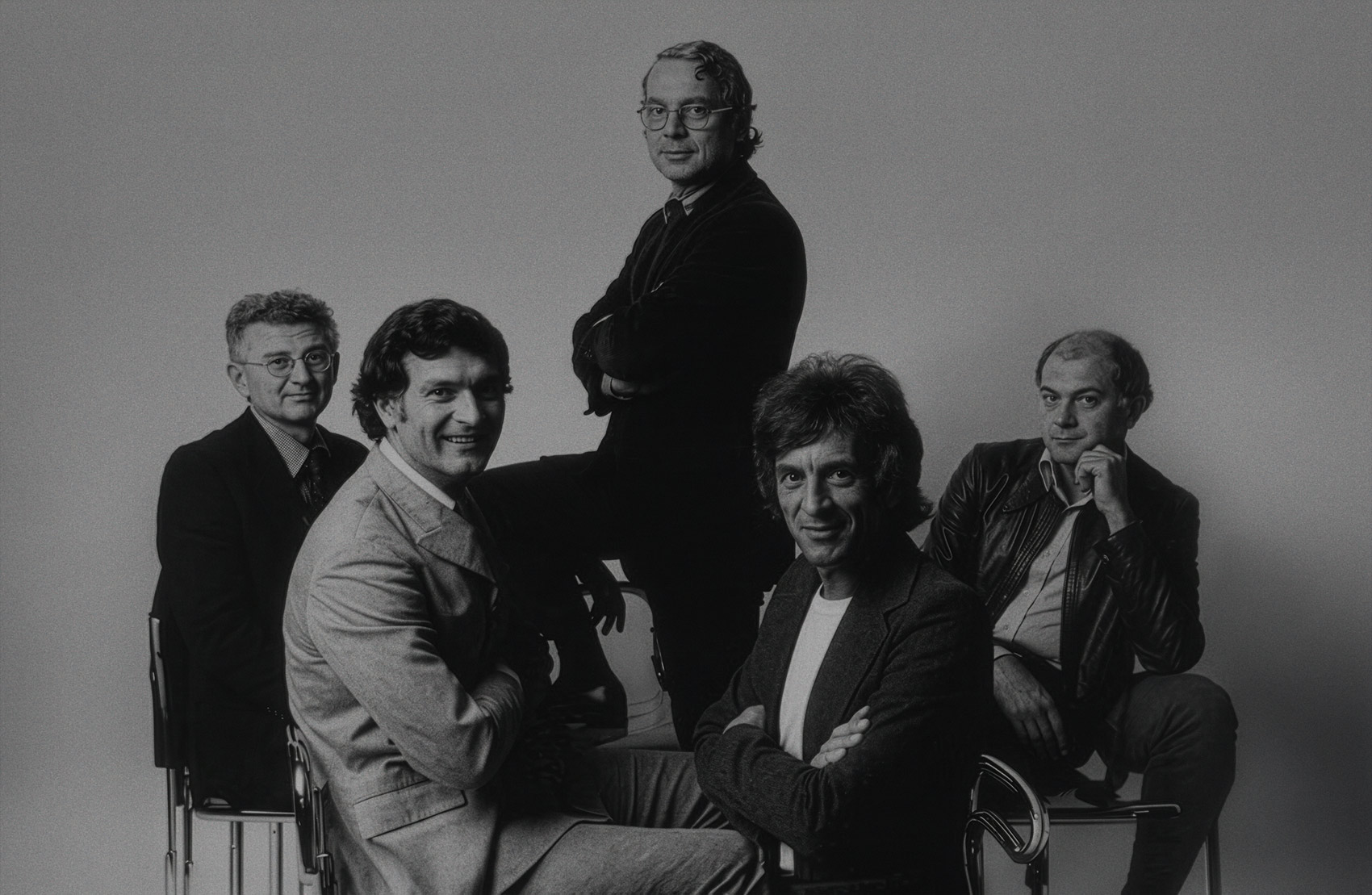
The five founding partners of Pentagram, London, 1972 — Mervyn Kurlansky, Kenneth Grange, Theo Crosby, Alan Fletcher, Colin Forbes.
Knowing is the easy part. The gap is between knowing and doing — the willingness to treat structural problems as the actual work, rather than as interruptions to it.
Most agency owners see what's wrong. They've decided, at some point, that fixing it can wait — that a strong brief will shift the trajectory, that a better client will change the dynamic, that the circumstances will improve on their own. Occasionally that's right. More often, the brief that could have changed things arrives before the work is done, and the outcome looks like ours did that year.
The Loop
What growth looks like from the inside is less a trajectory than a continuous diagnostic practice.
Find the gap, invest in closing it — a hire, a rebuilt process, whatever it actually requires. The agency improves, better work arrives, and somewhere inside that engagement, the next weakness surfaces. The cycle repeats indefinitely, sharpening as it goes.
The pattern repeats at every level of the business. For years, across almost every function, we settled for capability we could afford rather than capability we needed. The investment case for upgrading was always easy to defer. What wasn't easy to ignore, in hindsight, was that almost every recurring problem traced back to the same people — be it project managers, accountants, account managers. Once we made those investments, entire categories of difficulty disappeared. The problems rarely announce themselves as hiring problems. They arrive as scope creep, difficult client conversations, the persistent friction that feels like bad luck until you fix the underlying cause and it stops.
It sounds straightforward. Because it is. But in practice it requires something closer to nerve — the willingness to commit real money to a problem whose cost is mostly invisible, before the situation has become urgent enough to make the decision feel obvious.
The timing matters most. The investment should come before the obvious necessity — before you've lost work to the gap, ideally before a client has noticed it. That difference is mostly what separates the agency building ahead of demand from the one patching problems under pressure.
Stefan Sagmeister was told by his mentor Tibor Kalman: "The most difficult thing when running a design studio is to figure out how not to grow." The provocation is about intention — scaling without the foundations to support it. Growth without investment in the underlying structure is just exposure: you get bigger and more fragile at the same time. The agencies that hold up have generally made as many deliberate investments in their own infrastructure as in their client output.
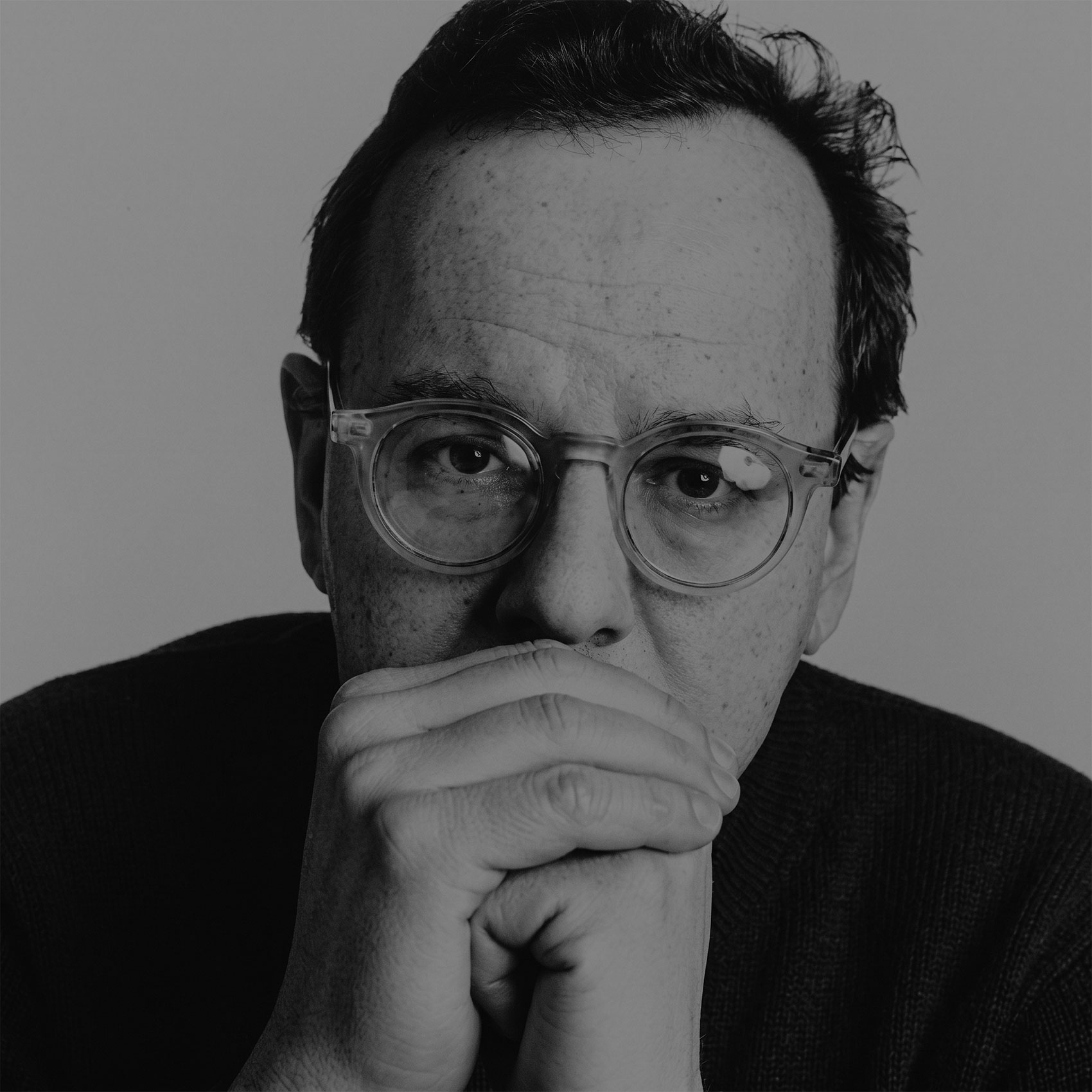
Tibor Kalman, founder of M&Co, c. 1989. His provocation — "figure out how not to grow" — remains the sharpest test of a studio's intention.
Sustaining this requires a kind of honesty that doesn't soften during a good quarter or blur in a strong year — and a willingness to spend money and time on something that won't appear in the work for six months or more. The creative industry isn't naturally good at valuing what can't be immediately shown.
The finances follow the same logic. Agencies that treat annual profit partly as material for the next phase of building consistently break through their own ceilings. Those that don't tend to plateau — the capacity for the next level of work was simply never built.
The Structural Work Is the Creative Work
Most of the conversation about running a creative business stays at the operational level. Those things matter. But the founders who have built the most durable creative enterprises tend to treat the design of the business itself with the same seriousness they bring to the work.
Michael Wolff, co-founder of Wolff Olins and still practising after more than six decades, describes his approach as "an open mind and scepticism of my experience" — a willingness to interrogate what he's built rather than defend it. Wolff Olins was structured around a deliberate complementarity from the start: Wolff had never met a designer who could articulate why design mattered commercially. Olins had never encountered anyone with Wolff's instinct for company culture. The partnership was built around that gap before a single client arrived.
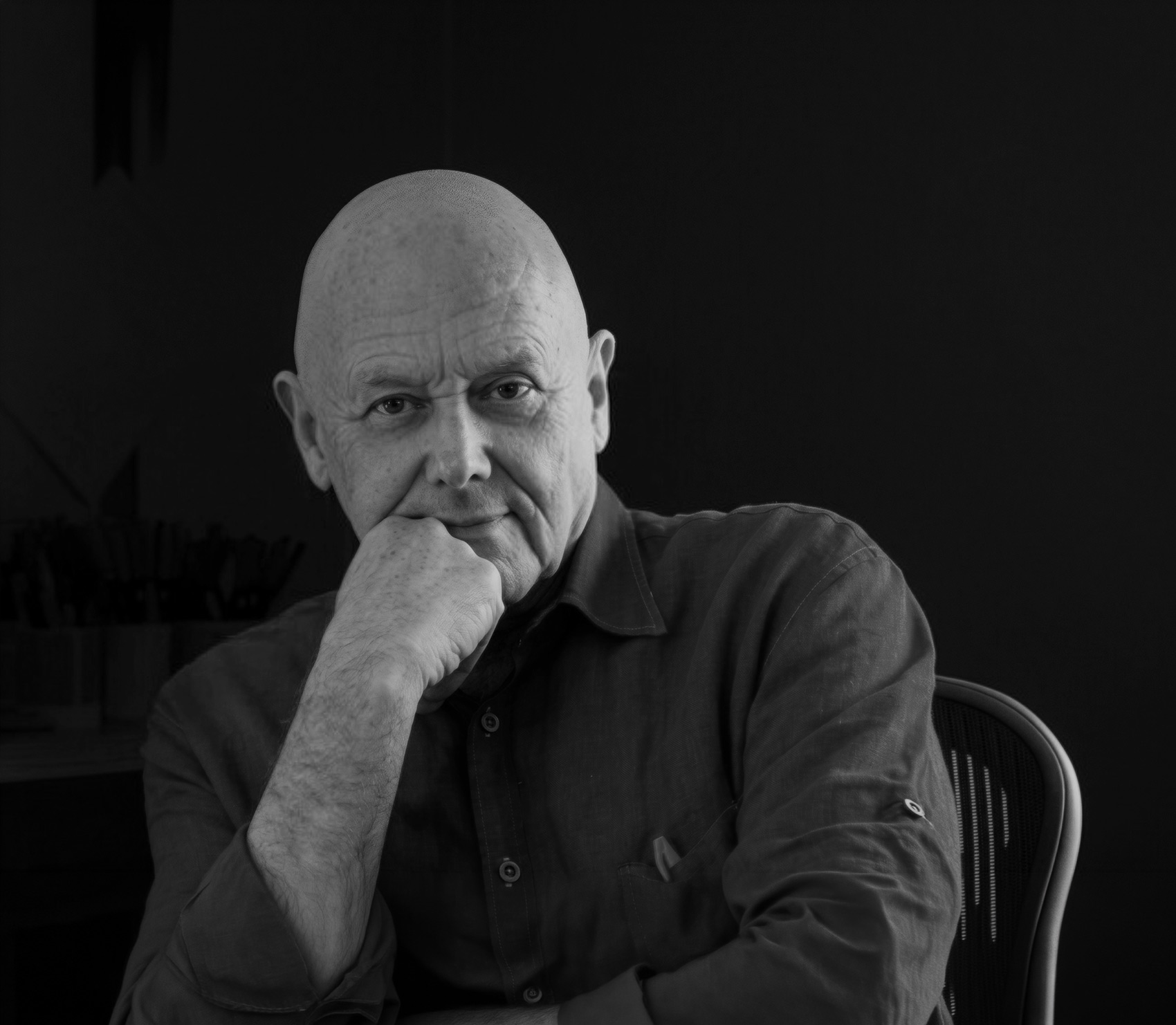
Michael Wolff, co-founder of Wolff Olins, at his studio. Still practising after six decades.
Pentagram went further: no CEO, no creative directors, equal profit share, unanimous election for every new partner. A governance model treated as a design brief, held through generational transitions and considerable internal friction for over fifty years — built with intention, not accumulated by default.
These are illustrations of what becomes possible when the business is designed with the same care as the work it exists to produce. Both firms arrived at their structures by asking questions most agencies leave implicit: what does this business exist to do, and who holds that standard when the founders aren't in the room?
That second question is worth sitting with. An agency that functions well only because the founder is present has been held together, not built. The goal — the one that most founders don't reach until well into the business — is an operation whose quality is independent of the founder's daily involvement. When that holds, something changes at the top. The founder stops being a bottleneck and starts having genuine capacity: for bigger decisions, for new directions, for the kind of thinking that actually requires their judgment rather than just their time. The machine running without you is not the end of your role. It's the beginning of the more important one.
My own experience running multiple entities — an agency and studios in different niches — came from a version of the same inquiry. Each structure exists because a different one had a ceiling for a specific kind of problem. The model carries real costs in complexity, and it served a particular set of circumstances rather than a universal logic. What it forced was a precision about what each entity was actually built for. That precision is available to any agency willing to ask the question, whatever form the business takes.
As production has been commoditised, the value of a creative agency concentrates in judgment — the ability to identify the right answer before running four rounds of work, the accumulated taste to know what will hold up. Judgment doesn't scale through headcount. It scales through the architecture built around it.
The Same Brief, Years Later
Years after that failed engagement, a global technology company came to us — considerably larger than the first, more layers of approval, higher expectations, and significantly more at stake.
The project went well.
The team had grown, but that wasn't why the work was better. The agency had spent the intervening years finding the gaps that first project exposed and closing them — stronger seniority, a more reliable process, a real capacity for holding complexity at that scale. Each investment had been made before the pressure arrived, none of it visible in any case study — all of it visible in the outcome.
That's the work nobody photographs — the process rebuilt between engagements, the senior hire made a year before it was critical. It doesn't feature in award entries. But it's the reason the work that does get entered is as good as it is.
The loop doesn't close. We handled that second engagement well. We're already carrying the weaknesses a more demanding brief will eventually expose. The question that determines the ceiling is whether you're already investing in what closes them.
Sources
- Colin Forbes — Pentagram founding partner; former president, International Council of Graphic Design Associations
- Pentagram — design partnership founded 1972 by Colin Forbes, Alan Fletcher, Theo Crosby, Kenneth Grange, and Mervyn Kurlansky
- Stefan Sagmeister — designer; founder of Sagmeister Inc., later Sagmeister & Walsh
- Tibor Kalman — designer; founder of M&Co; editor of Colors magazine
- Michael Wolff — co-founder of Wolff Olins; practising since the 1960s
- Wolff Olins — brand consultancy founded by Michael Wolff and Wally Olins, 1965